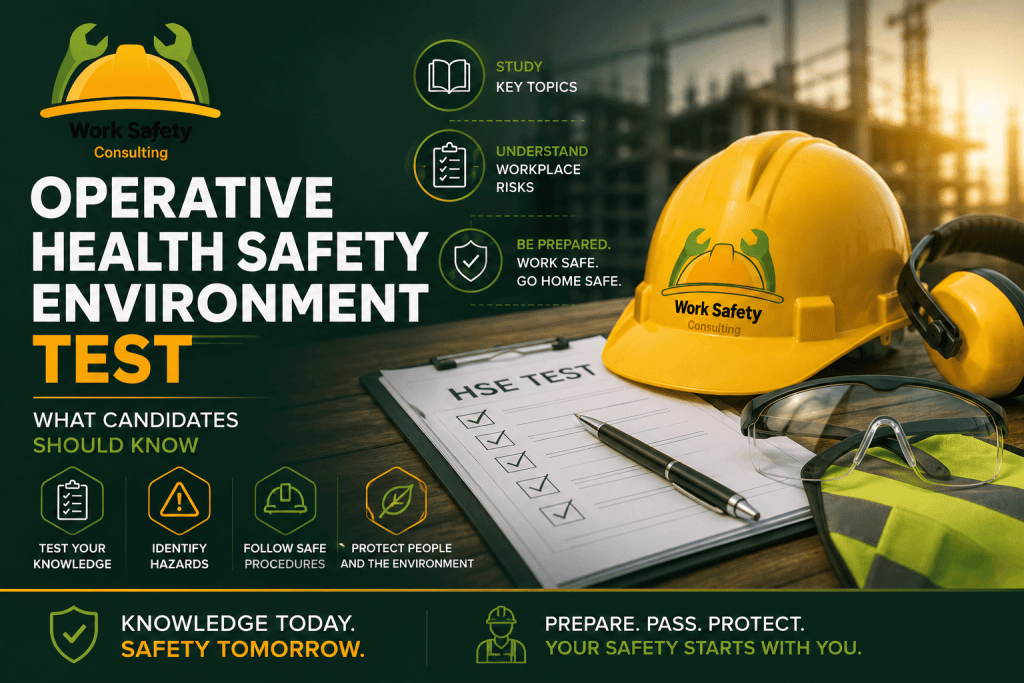
An Operative Health Safety Environment (HSE) test is generally designed to assess whether workers understand the basic health, safety and environmental principles required to perform their jobs safely.
The exact content of an HSE test depends on the employer, industry and type of work involved. However, most tests focus on practical workplace safety knowledge and an employee’s ability to recognize and respond to common hazards.
Why Are HSE Tests Important?
HSE tests help organizations determine whether workers understand important workplace risks and the procedures required to control them.
They can be used during:
- Employee recruitment
- Workplace induction
- Safety training
- Contractor onboarding
- Employee competency assessments
- Periodic refresher training
Testing can help employers identify areas where additional training may be needed and ensure that workers have a basic understanding of their safety responsibilities.
Topics Commonly Covered in an Operative HSE Test
Candidates preparing for an operative HSE test should understand the hazards associated with their specific workplace.
Common topics may include:
- Hazard identification
- Risk assessment
- Personal protective equipment (PPE)
- Manual handling
- Fire safety
- Emergency procedures
- Workplace safety signs
- Safe use of equipment
- Environmental responsibilities
- Incident reporting
- First aid awareness
- Slips, trips and falls
- Hazardous substances
The exact topics will vary depending on the industry and the nature of the job.
Personal Protective Equipment
Personal Protective Equipment, commonly known as PPE, is designed to protect workers from specific workplace hazards.
Depending on the job, PPE may include:
- Safety helmets
- Safety boots
- High-visibility clothing
- Safety glasses
- Gloves
- Hearing protection
- Respiratory protection
- Protective clothing
Workers should understand when PPE is required, how to wear it correctly and how to inspect and maintain it.
However, PPE should not always be considered the first or only method of controlling workplace risks. Organizations should first consider whether hazards can be eliminated or reduced through other control measures.
Hazard Identification
Workers should be able to recognize common workplace hazards.
These may include:
- Wet or slippery floors
- Unprotected machinery
- Electrical hazards
- Falling objects
- Hazardous chemicals
- Excessive noise
- Poor housekeeping
- Working at height
- Moving vehicles
- Manual handling risks
Understanding how to identify hazards allows workers to take appropriate action before an accident occurs.
Risk Assessment
Risk assessment is another important topic that may appear in an operative HSE test.
A risk assessment involves identifying hazards, determining who may be affected and evaluating the likelihood and potential severity of harm.
Once risks have been assessed, appropriate control measures can be introduced to reduce the risk to an acceptable level.
Workers should understand that they have a responsibility to follow established safety procedures and report hazards they encounter.
Emergency Procedures
Workers should know what to do during an emergency.
Depending on the workplace, emergencies may include:
- Fire
- Chemical spills
- Serious injuries
- Equipment failures
- Gas leaks
- Environmental incidents
Employees should know how to raise an alarm, report an emergency, evacuate safely and follow instructions from designated emergency personnel.
Incident and Near-Miss Reporting
Employees should understand the importance of reporting workplace incidents and near misses.
A near miss is an event that could have resulted in injury, damage or loss but did not.
Reporting near misses can help organizations identify hazards before a more serious incident occurs.
Workers should report incidents through the appropriate workplace reporting process and provide accurate information about what happened.
Environmental Responsibilities
The environmental component of an HSE test may assess a worker’s understanding of responsible workplace practices.
Employees may be expected to understand:
- Proper waste disposal
- Spill prevention
- Pollution prevention
- Recycling procedures
- Chemical handling
- Protection of water sources
- Energy conservation
Every employee has a role to play in reducing the environmental impact of workplace activities.
How to Prepare for an Operative HSE Test
Good preparation starts with understanding the safety requirements of the specific workplace.
Candidates can prepare by:
- Reviewing workplace health and safety policies.
- Studying relevant training materials.
- Learning about common workplace hazards.
- Reviewing PPE requirements.
- Understanding emergency procedures.
- Learning how to report incidents and hazards.
- Practicing identifying unsafe conditions.
- Understanding basic environmental responsibilities.
Candidates should focus on understanding safety principles rather than simply memorizing answers. The knowledge gained from HSE training should be applicable to real workplace situations.
The Importance of Practical Safety Knowledge
Passing an HSE test is important, but the ultimate goal is to ensure that workers can apply their knowledge in the workplace.
A worker who understands how to identify a hazard, assess a risk and follow the correct safety procedure is better prepared to protect themselves and others.
Safety should be part of everyday work behavior, not something employees think about only when preparing for a test.
Conclusion
An Operative Health Safety Environment test is an important tool for ensuring that workers understand their basic safety, health and environmental responsibilities.
Proper preparation can improve test performance while, more importantly, helping workers make safer decisions in real workplace situations.
By understanding workplace hazards, using PPE correctly, following established procedures and reporting unsafe conditions, employees can contribute to a safer and healthier working environment.
SEO Focus Keyword
Operative Health Safety Environment Test
Meta Description
Prepare for an Operative Health Safety Environment Test with this guide covering workplace hazards, PPE, risk assessment, emergency procedures and HSE responsibilities.