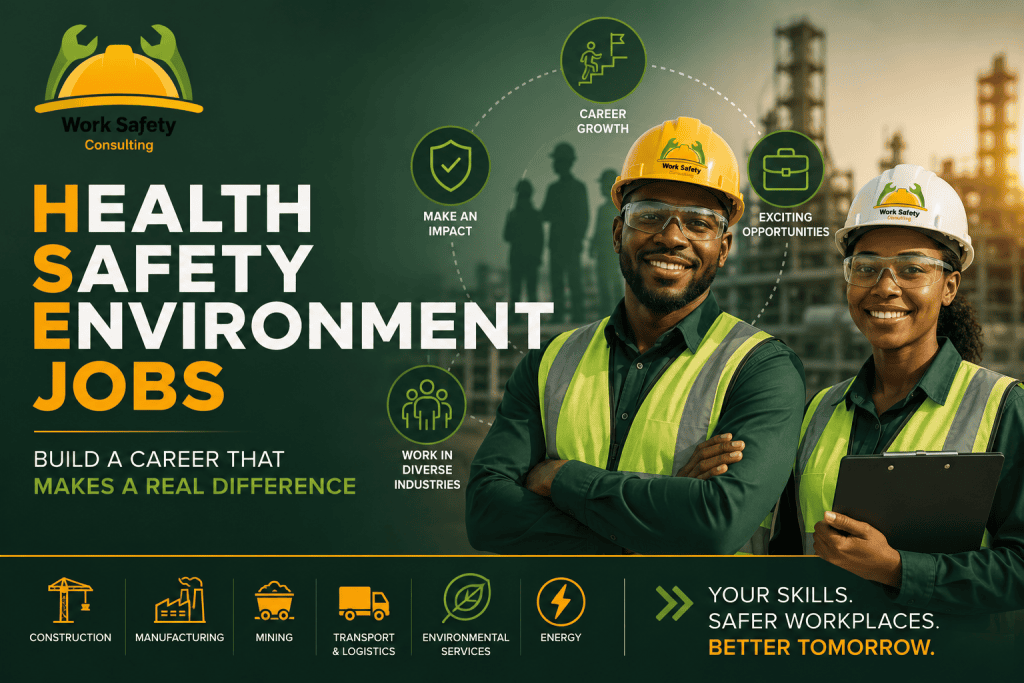
Health Safety Environment (HSE) jobs are increasingly important across industries where employees face occupational, operational and environmental risks.
Professionals working in HSE help organizations create safer workplaces, comply with regulations and reduce environmental impacts.
What Are Health Safety Environment Jobs?
Health Safety Environment jobs involve protecting employees, managing workplace risks and helping organizations meet their health, safety and environmental responsibilities.
HSE professionals can work in a wide range of industries, including:
- Construction
- Mining
- Manufacturing
- Logistics and transportation
- Engineering
- Energy
- Agriculture
- Environmental services
- Oil and gas
The exact responsibilities depend on the industry, organization and level of the position.
Common HSE Career Opportunities
Some common HSE positions include:
- HSE Officer
- Health and Safety Officer
- Safety Coordinator
- HSE Manager
- Environmental Officer
- Occupational Health and Safety Specialist
- Safety Supervisor
- Risk Manager
- Environmental Health and Safety Specialist
- HSE Consultant
Entry-level positions may focus primarily on workplace inspections, reporting and safety support, while senior roles often involve strategic planning, management and organizational compliance.
What Does an HSE Officer Do?
An HSE Officer plays an important role in maintaining safe working conditions and supporting the organization’s HSE objectives.
Typical responsibilities may include:
- Conducting workplace inspections
- Identifying hazards
- Performing risk assessments
- Investigating incidents
- Delivering safety training
- Monitoring compliance
- Preparing HSE reports
- Advising employees and management
- Monitoring PPE usage
- Supporting emergency preparedness
- Participating in incident investigations
- Monitoring environmental controls
The role can vary significantly depending on the industry. An HSE Officer working on a construction site may focus heavily on working at height, machinery and site hazards, while an HSE professional in an office environment may focus more on ergonomics, emergency preparedness and general workplace safety.
Skills Needed for HSE Jobs
Successful HSE professionals generally need strong communication, analytical and problem-solving skills.
Important abilities include:
Risk Assessment
HSE professionals need to identify hazards, evaluate risks and recommend appropriate control measures.
Safety Inspections
Regular workplace inspections help identify unsafe conditions and behaviors before they result in accidents.
Incident Investigation
HSE professionals should be able to investigate incidents and identify underlying causes to help prevent similar events from occurring again.
Report Writing
HSE Officers and Managers often prepare inspection reports, incident reports, risk assessments and other documentation.
Communication
HSE professionals must communicate effectively with employees, supervisors, contractors and management.
Training and Presentation
Many HSE roles involve delivering toolbox talks, safety inductions and other workplace training sessions.
Knowledge of Safety Requirements
A good understanding of relevant workplace health and safety requirements is important for helping organizations operate responsibly and maintain compliance.
How to Start an HSE Career
People interested in HSE careers can consider relevant education and professional training in occupational health and safety, environmental management or related disciplines.
The specific qualifications required will depend on the employer, industry and position.
Practical experience is also valuable. Entry-level roles, internships and workplace safety responsibilities can help individuals develop practical knowledge and understand how HSE principles are applied in real working environments.
Additional professional development can also help HSE professionals progress into supervisory, management or consulting positions.
HSE Jobs in Different Industries
Construction
Construction HSE professionals may manage risks related to:
- Working at height
- Heavy machinery
- Excavation
- Electrical work
- Construction materials
- Temporary structures
- Site traffic
Mining
Mining operations can involve significant risks associated with heavy equipment, underground operations, explosives, dust and other hazards.
HSE professionals in this sector play an important role in risk management, safety monitoring and worker protection.
Manufacturing
Manufacturing HSE roles may focus on machinery safety, hazardous substances, noise, ergonomics and production-related risks.
Logistics and Transportation
HSE professionals in logistics may manage risks involving vehicles, loading and unloading, warehouses, manual handling and workplace traffic.
Environmental Services
Environmental HSE professionals may focus on waste management, pollution prevention, environmental monitoring and compliance.
Why HSE Careers Matter
HSE professionals have an important responsibility because their work can directly contribute to preventing workplace injuries, protecting employee health and reducing environmental harm.
A strong HSE professional does more than enforce rules. They help create a culture where employees understand risks and actively participate in creating a safer workplace.
Career Growth in HSE
An HSE career can provide opportunities for professional growth.
An individual may begin in an entry-level safety role and progress into positions such as:
HSE Officer → HSE Supervisor → HSE Manager → HSE Consultant or HSE Director
Career progression depends on experience, qualifications, industry knowledge and professional development.
Conclusion
Health Safety Environment jobs offer opportunities for people interested in protecting workers, improving workplace safety and supporting environmental sustainability.
HSE professionals are needed across many industries, from construction and mining to manufacturing, logistics and environmental services.
For individuals who are passionate about workplace safety and responsible business practices, a career in HSE can be both rewarding and impactful. As organizations continue to focus on risk management, employee wellbeing and environmental responsibility, skilled HSE professionals remain an important part of the modern workplace.