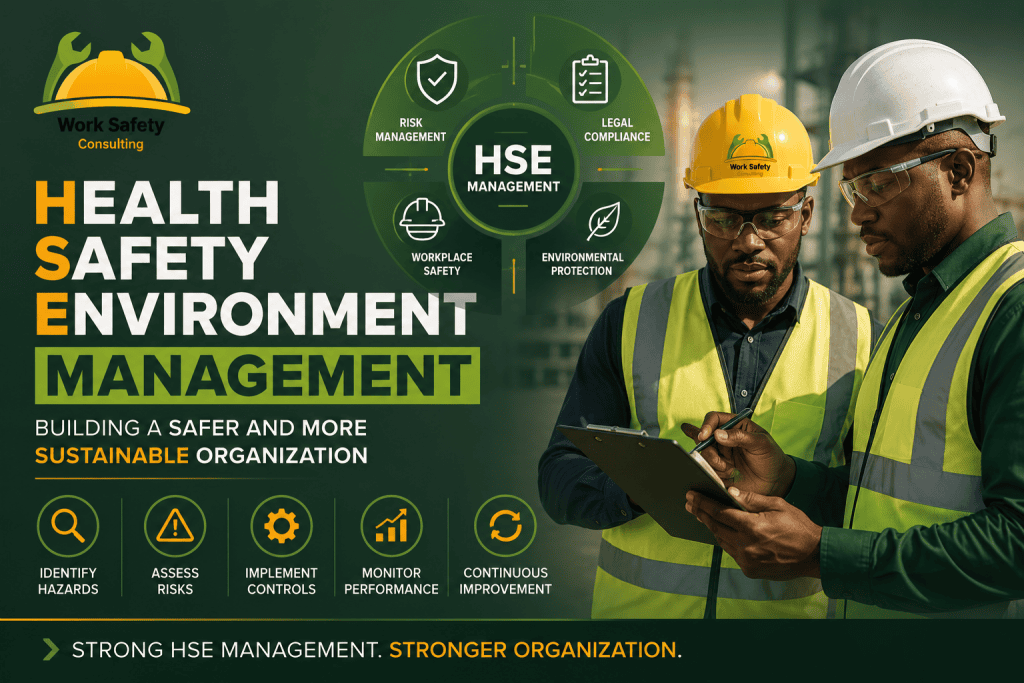
Health Safety Environment (HSE) Management is the structured approach organizations use to identify, control and monitor risks related to workplace health, safety and environmental performance.
An effective HSE management system provides a framework for making sure that safety and environmental responsibilities are integrated into everyday business activities.
What Is HSE Management?
HSE management involves establishing policies and procedures that govern how an organization handles workplace hazards, employee health and environmental responsibilities.
It typically covers:
- Risk management
- Workplace safety
- Occupational health
- Environmental protection
- Legal compliance
- Emergency response
- Employee training
- Incident investigation
Rather than reacting to accidents after they happen, effective HSE management focuses on prevention. The goal is to identify potential risks early and introduce appropriate measures to prevent incidents, injuries, illnesses and environmental damage.
The Importance of Risk Assessment
Risk assessment is one of the most important elements of HSE management.
Organizations should identify hazards, determine who may be affected, evaluate the likelihood and severity of potential incidents and introduce appropriate control measures.
For example, a construction company may identify working at height as a major hazard. Controls could include guardrails, fall protection systems, worker training and regular equipment inspections.
Risk assessments should be reviewed regularly, especially when there are changes to equipment, work processes, personnel or operating conditions.
HSE Policies and Procedures
A strong HSE management system should be supported by documented policies and procedures.
These may include:
- Health and safety policies
- Environmental policies
- Emergency response plans
- Fire safety procedures
- PPE requirements
- Incident reporting procedures
- Waste management procedures
- Contractor management procedures
Employees should be trained to understand these procedures and know how to apply them in their daily work.
Policies should also be communicated clearly across the organization so that everyone understands their individual responsibilities.
Employee Training and Competency
Training is a critical part of effective HSE management.
Employees should receive appropriate training based on the hazards associated with their roles. This may include workplace induction, emergency procedures, personal protective equipment, hazard identification and safe operating procedures.
Supervisors and managers may require additional training to help them understand their responsibilities for managing workplace risks.
Regular refresher training can also help employees maintain their knowledge and adapt to changes in workplace procedures and requirements.
Incident Reporting and Investigation
A strong HSE management system should encourage employees to report accidents, incidents and near misses.
Near misses are particularly important because they can reveal hazards before a serious incident occurs.
When an incident happens, organizations should investigate the underlying causes rather than simply focusing on who was involved. The purpose of an investigation should be to understand what happened and identify corrective actions that can prevent similar incidents in the future.
Emergency Preparedness
Organizations should have plans in place to respond to foreseeable emergencies.
Depending on the nature of the business, these may include:
- Fires
- Serious workplace injuries
- Chemical spills
- Equipment failures
- Natural disasters
- Environmental incidents
Emergency procedures should be communicated to employees and tested through drills or exercises where appropriate.
Measuring HSE Performance
Organizations can monitor HSE performance using indicators such as:
- Number of workplace incidents
- Lost-time injuries
- Near misses
- Safety inspections completed
- Training hours
- Environmental incidents
- Corrective actions closed
- Employee participation in safety programs
Regular monitoring helps management identify weaknesses and improve performance.
It is also useful to consider both lagging indicators, which measure events that have already occurred, and leading indicators, which measure proactive activities such as inspections, training and hazard reporting.
The Role of Management in HSE
Management commitment is essential to building a strong HSE culture.
Managers should provide adequate resources, support employee training and demonstrate through their actions that health, safety and environmental responsibilities are priorities.
When leadership actively supports HSE initiatives, employees are more likely to take safety procedures seriously and participate in improving workplace conditions.
Continuous Improvement
HSE management should be viewed as a continuous process rather than a once-off activity.
Organizations should regularly review their policies, assess performance, investigate incidents and identify areas where improvements can be made.
Continuous improvement may involve introducing new technologies, updating procedures, improving employee training or strengthening risk controls.
Conclusion
Health Safety Environment Management is essential for organizations that want to protect their employees, operate responsibly and achieve sustainable growth.
A proactive HSE management system can reduce workplace risks, improve safety culture, support regulatory compliance and minimize environmental impacts.
By identifying hazards, assessing risks, training employees, monitoring performance and continuously improving processes, organizations can create safer workplaces while strengthening their overall business performance.